
Dry Heat Vs Moist Heat: Which Works Best for Pain Relief?
When your muscles ache or your joints feel stiff, heat therapy is often the first remedy that comes to mind. But the ongoing discussion around dry heat vs moist heat leaves many people wondering which method actually works better for their needs. Both approaches have loyal advocates in the physical therapy and wellness communities, yet they produce distinct effects on your body.
This distinction matters more than you might think, particularly if you're managing chronic conditions like back pain, osteoarthritis, or fibromyalgia. At wrmth, we designed our heated outdoor furniture around dry heat technology because it delivers steady, therapeutic warmth without moisture complications. That said, moist heat has its own advantages in certain situations, and knowing when to use each type can make a real difference in your recovery.
This article compares both heat therapies and explains how each affects your muscles and joints. By the end, you'll know which approach fits your specific pain relief goals, whether you're recovering from a workout or seeking long-term comfort for chronic conditions.
What people mean by dry heat and moist heat
The terms dry heat and moist heat describe two fundamentally different approaches to applying warmth to your body. When people discuss the dry heat vs moist heat debate, they're referring to whether water vapor accompanies the thermal energy or not. This distinction affects how deeply the warmth penetrates your tissues and how your skin responds to the treatment.
Dry heat explained
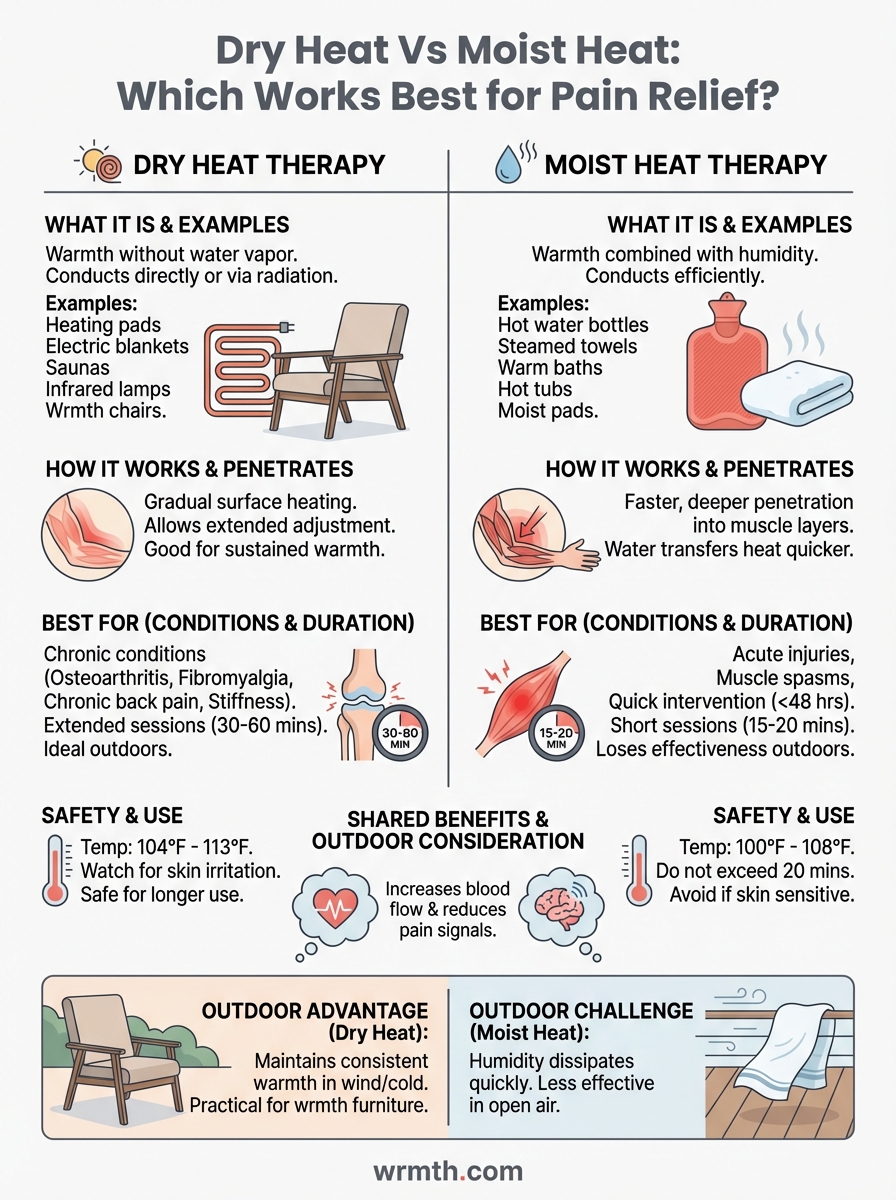
Dry heat therapy delivers warmth without any moisture or humidity. Common sources include heating pads, electric blankets, saunas, infrared lamps, and heated furniture like our wrmth chairs. The heat transfers directly to your skin through conduction or radiation, creating a comfortable sensation that many people find less clammy than moist alternatives.
Your skin stays dry during the entire treatment, which means you can use these devices for extended periods without discomfort. Dry heat doesn't require preparation time and won't leave damp spots on furniture or clothing, making it particularly convenient for everyday use.
Moist heat explained
Moist heat combines warmth with water vapor or humidity. You'll encounter this approach through hot water bottles, steamed towels, warm baths, hot tubs, and moist heating pads that release moisture when activated. The added humidity allows heat to penetrate deeper into muscle tissue compared to dry methods.
Moist heat conducts thermal energy more efficiently because water transfers warmth approximately 25 times faster than air.
However, this method requires more setup and cleanup. You need to wet towels, prepare baths, or wait for moist pads to activate. The dampness can also feel uncomfortable if you're sensitive to humidity or plan to use the treatment for longer than 20 minutes at a time.
How each type of heat relieves pain and stiffness
Both heat methods work by increasing blood flow to the affected area, which delivers oxygen and nutrients while removing metabolic waste products. The warmth also triggers your nervous system to reduce pain signals and promotes muscle relaxation by decreasing tension in tight tissues. Understanding these mechanisms helps you decide which approach suits your specific condition when comparing dry heat vs moist heat.
How dry heat penetrates tissues
Dry heat raises surface temperature gradually, allowing your body to adjust to the warmth over time. This method works particularly well for chronic conditions that benefit from extended treatment sessions. Your muscles relax as the steady warmth reduces nerve sensitivity and increases flexibility in stiff joints.
The absence of moisture means you can apply dry heat for 30 to 60 minutes safely, giving your tissues more time to respond to the therapeutic effects. This extended duration proves especially valuable for conditions like osteoarthritis and fibromyalgia that require consistent warmth.
How moist heat works faster
Moist heat penetrates deeper into muscle layers because water conducts thermal energy more efficiently than air. You'll typically feel relief within 15 to 20 minutes as the humidity helps warmth reach tissues beneath the skin surface.
The added moisture increases the rate of heat transfer, making it effective for acute injuries and muscle spasms that need quick intervention.
When dry heat works best and when moist heat wins
The choice between dry heat and moist heat depends on your specific condition, timeline, and personal comfort preferences. Your body responds differently to each method based on whether you need deep penetration for acute issues or sustained warmth for chronic pain. Matching the right therapy to your situation accelerates recovery and prevents unnecessary discomfort.
Best uses for dry heat
Dry heat excels at managing chronic conditions that require consistent, long-duration treatment. You'll get the most benefit when dealing with osteoarthritis, fibromyalgia, chronic back pain, or general muscle stiffness that develops gradually. The extended application time of 30 to 60 minutes allows your tissues to fully relax without the clammy feeling that moisture creates.
Dry heat also works better outdoors or in situations where you need portability without wetness concerns.
Best uses for moist heat
Moist heat delivers faster results for acute injuries and muscle spasms that need immediate attention. You should choose this method within the first 48 hours after pulling a muscle, experiencing sudden cramps, or developing tension headaches. The deeper penetration reaches inflamed tissues quickly, making it effective for sports injuries and sudden pain flare-ups that require rapid intervention.
How to use heat therapy safely at home
Safe heat therapy requires proper temperature control and attention to your body's signals. You can avoid burns and skin damage by following specific guidelines regardless of whether you choose dry or moist heat applications. Most heat-related injuries happen when people exceed recommended temperatures or fall asleep during treatment sessions.
Temperature guidelines and duration
Keep dry heat applications between 104°F and 113°F to prevent skin burns while achieving therapeutic benefits. You can safely use dry heat for 30 to 60 minutes at a time, making it ideal for extended relaxation sessions. Moist heat requires lower temperatures around 100°F to 108°F because water conducts warmth more aggressively than air.
Never apply heat therapy for longer than 20 minutes at a time when using moist methods, as prolonged humidity can soften and damage your skin.
Warning signs to watch for
Stop treatment immediately if you notice increased swelling, redness, or blistering on your skin. Your heat source is too hot if you feel discomfort within the first few minutes. People with diabetes, poor circulation, or reduced sensation should consult their doctor before starting any heat therapy program, as these conditions increase burn risk even at lower temperatures.
How to choose the right heat for outdoor comfort
Outdoor environments present unique challenges that make the dry heat vs moist heat debate particularly relevant. You need a heating solution that withstands weather conditions, provides consistent warmth, and doesn't create moisture problems that damage furniture or attract insects. Traditional moist heat methods like hot tubs work well for short sessions but fail to provide the extended comfort you need for relaxing on your deck or dock throughout the evening.
Why outdoor spaces need consistent warmth
Moist heat loses effectiveness quickly in open-air environments where humidity dissipates into the atmosphere. You'd constantly need to reapply steamed towels or maintain hot water, which becomes impractical when you want to enjoy your outdoor space for hours. Wind and lower temperatures also reduce the therapeutic benefits of moisture-based methods, leaving you cold and uncomfortable.
Dry heat maintains its effectiveness regardless of outdoor conditions, providing steady warmth without the complications of water or humidity.
How wrmth furniture extends your outdoor season
Our heated Muskoka chairs deliver therapeutic dry heat directly to your body, eliminating the need for inefficient patio heaters or complicated moisture systems. You get 30 to 60 minutes of continuous warmth that helps manage chronic pain while you relax outdoors. The heating elements built into each chair provide the same benefits you'd expect from indoor heat therapy, but designed specifically for decks, docks, and patios in cooler weather.
Key takeaways
The dry heat vs moist heat debate comes down to your specific needs and circumstances. Moist heat works faster for acute injuries and muscle spasms, delivering deeper penetration within 15 to 20 minutes. Dry heat provides better results for chronic conditions that benefit from extended treatment sessions lasting 30 to 60 minutes.
Your environment also matters when choosing between these therapies. Moist heat loses effectiveness in outdoor settings where humidity dissipates quickly into the air. Dry heat maintains consistent warmth regardless of weather conditions, making it the practical choice for extending your outdoor season on decks, docks, and patios.
Both methods increase blood flow and reduce pain signals, but they achieve these benefits through different mechanisms. You can safely use either approach by following temperature guidelines and watching for warning signs like excessive redness or blistering. Experience the benefits of therapeutic dry heat outdoors with furniture designed specifically for year-round comfort in any climate.