
11 Best Infrared Patio Heater Picks for 2026, Reviewed
When temperatures drop, most people retreat indoors and abandon their decks and patios until spring. But it doesn't have to be that way. Finding the best infrared patio heater can extend your outdoor season by months, letting you enjoy your backyard even when there's a chill in the air.
At wrmth furniture, we've spent years studying how people stay comfortable outdoors. Our approach, heated furniture that delivers warmth directly to your body, grew from understanding what traditional patio heaters do well and where they fall short. That research gives us a unique perspective on outdoor heating solutions, including the infrared heaters we're reviewing here.
This guide breaks down 11 top-rated infrared patio heaters for 2026, covering everything from compact tabletop units to powerful freestanding models. Whether you're outfitting a small balcony or a sprawling patio, you'll find options that fit your space, budget, and heating needs. We've also included key buying factors so you can make a decision that keeps you warm for seasons to come.
1. Wrmth heated Muskoka chair
While most infrared patio heaters hang from walls or stand on pedestals, the Wrmth heated Muskoka chair takes a completely different approach. Instead of heating the air around you, this heated outdoor furniture delivers warmth directly to your body through the backrest and seat. You get therapeutic dry heat that relieves muscle tension and keeps you comfortable for hours, not just a few minutes of ambient warmth. This makes it one of the best infrared patio heater alternatives for anyone who spends extended time outdoors.
Heat experience and coverage
The chair's infrared heating elements run through both the seat and backrest, creating a warm cocoon effect that surrounds your back, hips, and thighs. You'll feel heat within seconds of switching it on, and the coverage stays consistent whether you're reading, working on a laptop, or simply relaxing. Unlike overhead heaters that leave your legs cold while roasting your head, this design warms the parts of your body in contact with the chair. The therapeutic benefits go beyond comfort, helping with chronic pain, stiff muscles, and circulation issues during cool evenings.
"Direct contact heat outperforms radiant space heaters for personal warmth and stays effective in wind and open air."
Setup and power needs
You won't need an electrician or gas line hookup. The chair plugs into any standard 120V outlet and draws about the same power as a space heater. Setup takes minutes: place it where you want it, plug it in, and adjust the temperature using the integrated controller. The 10-foot power cord gives you flexibility for placement, though you may want an outdoor-rated extension cord for spots farther from outlets. Each chair operates independently, so you can add multiple units without worrying about circuit loads or complex wiring.
Comfort, durability, and safety notes
The Muskoka (Adirondack) style design offers ergonomic support with wide armrests and a reclined backrest. Wrmth builds these chairs from weather-resistant materials meant to withstand rain, snow, and UV exposure year-round. The heating system includes automatic shutoff features and stays cool to the touch on external surfaces. You can leave the chair outside through all four seasons without covering it, and the heating elements are sealed against moisture intrusion.
Pros and trade-offs
Pros:
- Delivers heat directly to your body instead of warming air
- Stays effective in windy conditions where traditional heaters fail
- Provides therapeutic benefits for pain and muscle tension
- No installation required beyond plugging it in
- Doubles as high-quality outdoor furniture when heating isn't needed
Trade-offs:
- Heats one person at a time rather than a group
- Requires proximity to electrical outlet
- Higher upfront cost than basic patio heaters
Typical price range
Individual Wrmth heated chairs start around $1,200 to $1,500, positioning them at the premium end of outdoor heating solutions. Wrmth is currently running an Indiegogo campaign that offers early access perks and special pricing for spring 2026 deliveries. You're investing in furniture that replaces both seating and heating, which changes the value equation compared to buying a chair and separate heater.
2. Infratech WD-Series dual element wall mount
The Infratech WD-Series represents high-end wall-mounted infrared heating with dual heating elements that deliver concentrated warmth to outdoor spaces up to 300 square feet. This permanently installed solution works best for patios, covered decks, and outdoor dining areas where you want reliable heat without taking up floor space. Commercial establishments and homeowners who prioritize performance over portability frequently choose this model.
Heat experience and coverage
You'll get instant infrared warmth from two quartz heating elements that produce up to 6,000 watts of power. The dual element design creates a wider heat distribution pattern than single-element units, covering roughly 12 to 15 feet of radius when mounted at the recommended 8 to 9 foot height. The heat penetrates directly to people and objects rather than warming air, which means you stay comfortable even when wind picks up. Infratech's reflector design focuses the infrared energy downward and outward for maximum efficiency.
"Dual heating elements provide more uniform coverage and eliminate cold spots in medium to large outdoor spaces."
Setup and power needs
Installation requires hardwired 240V electrical service and should be handled by a licensed electrician. You'll need to mount the unit to a wall or ceiling with adequate clearance (typically 2 feet from combustible materials), run the appropriate gauge wire, and connect it to a dedicated circuit breaker. The weatherproof housing handles rain and moisture, though you should install it under some overhead protection for longest lifespan. Plan on 2 to 4 hours for professional installation depending on your electrical setup.
Controls and smart options
Infratech offers multiple control options including basic on/off switches, variable heat controllers, and smart home integration through their app and compatible systems. You can schedule heating times, adjust intensity remotely, and even integrate voice control through popular platforms. The variable controls let you dial heat output from 10% to 100%, giving you precise temperature management.
Pros and trade-offs
Pros:
- High heat output covers large outdoor areas
- Dual elements eliminate cold spots
- Smart controls available for convenience
- Durable construction built for permanent installation
Trade-offs:
- Requires professional installation and 240V power
- Higher upfront cost including electrical work
- Fixed position once installed
Typical price range
The WD-Series units cost $800 to $1,400 depending on wattage and model, with installation adding another $300 to $800 for electrical work. This makes them one of the best infrared patio heater options for permanent outdoor spaces where performance justifies the investment.
3. Bromic Platinum Smart-Heat electric
The Bromic Platinum Smart-Heat stands out as a sleek, low-profile infrared heater designed for upscale outdoor spaces where aesthetics matter as much as performance. This ultra-thin electric model mounts flush to ceilings or walls and delivers powerful heat while maintaining a minimalist appearance that blends with modern architecture. You'll find it installed in high-end restaurants, luxury hotels, and residential patios where visible heating equipment would clash with the design.
Heat experience and coverage
You'll experience directional infrared warmth that reaches up to 14 feet when mounted at optimal height. The short-wave heating technology produces immediate heat you can feel within seconds, and the focused beam pattern lets you target specific seating areas rather than wasting energy heating empty space. A single 3000W unit effectively covers about 120 to 150 square feet, making it one of the best infrared patio heater choices for medium-sized dining or lounge areas.
Setup and power needs
Installation demands hardwired 240V electrical service and professional mounting to ensure proper clearances and safety. The ultra-slim 3.3-inch profile mounts directly to ceilings or can be recessed for an even cleaner look. Your electrician will need to connect it to a dedicated circuit and install it at least 8 feet above the floor with appropriate spacing from combustible materials.
"Short-wave infrared delivers faster heating response and better wind resistance than medium-wave alternatives."
Controls and smart options
Broadic pairs these heaters with their Smart-Heat Wireless Control system, giving you smartphone control, scheduling, and integration with home automation platforms. You can adjust output levels, set timers, and create heating zones across multiple units from a single app interface.
Pros and trade-offs
Pros:
- Ultra-thin design nearly disappears when mounted
- Instant heat response with short-wave technology
- Smart controls for remote management
- Wind-resistant performance in exposed locations
Trade-offs:
- Premium pricing for design and features
- Professional installation required
- Limited portability once installed
Typical price range
Expect to pay $1,200 to $1,800 for the heater itself, plus $400 to $900 for professional installation and electrical work.
4. Bromic Tungsten Smart-Heat electric
The Bromic Tungsten Smart-Heat electric delivers commercial-grade heating performance with a distinctive design that adds visual appeal to outdoor spaces. This medium-wave infrared heater balances efficiency with coverage, making it a strong contender for the best infrared patio heater in both residential and commercial settings. The Tungsten line features a signature glass front panel and sleek housing that transforms a functional appliance into a design element.
Heat experience and coverage
You'll notice the medium-wave infrared technology provides a gentler, more distributed heat pattern compared to short-wave units. A 3000W Tungsten model effectively warms areas up to 200 square feet when mounted at the recommended height of 8 to 10 feet. The heat feels comfortable and consistent without the intense direct warmth of short-wave heaters, making it ideal for dining areas where people sit for extended periods. Wind resistance remains strong since infrared energy transfers directly to objects and people rather than heating air.
Setup and power needs
Installation follows the same hardwired 240V electrical requirements as other Bromic models. You'll need a licensed electrician to mount the unit, run appropriate wiring, and connect it to a dedicated circuit. The mounting bracket system allows for both ceiling and wall installation with adjustable angles to direct heat where you need it. Clearance requirements typically call for 2 feet from combustible materials and adequate ventilation space.
Controls and smart options
Bromic integrates these units with their Smart-Heat control platform, giving you remote management through smartphone apps. You can create heating schedules, adjust intensity levels, and link multiple heaters into coordinated zones.
"Medium-wave infrared offers a sweet spot between instant heat response and gentle, sustained warmth for extended outdoor comfort."
Pros and trade-offs
Pros:
- Balanced heat distribution for comfortable dining
- Attractive design enhances outdoor aesthetics
- Smart integration with remote controls
- Durable construction for year-round outdoor use
Trade-offs:
- Slower heat response than short-wave models
- Professional installation required
- Premium pricing for features and design
Typical price range
The Tungsten series costs $900 to $1,500 for the heater unit, with installation adding $300 to $800 depending on electrical complexity and mounting location.
5. Infratech W-Series single element
The Infratech W-Series single element offers a more accessible entry point into professional-grade infrared heating without sacrificing the build quality and performance Infratech is known for. This wall-mounted electric heater works well for smaller patios, balconies, and targeted heating zones where you need reliable warmth but don't require the coverage of dual-element models. You'll find it strikes a practical balance between performance and budget for residential outdoor spaces.
Heat experience and coverage
You'll experience focused infrared warmth from a single quartz heating element that delivers between 1500W and 3000W depending on the model you choose. A 2400W unit effectively covers roughly 80 to 120 square feet when mounted at the standard 8 to 9 foot height. The heat reaches you directly rather than warming the surrounding air, which means wind doesn't diminish effectiveness the way it does with convection heaters. Coverage patterns work best for defined seating areas like a small dining table or conversation nook rather than trying to heat an entire large patio.
Setup and power needs
Installation requires hardwired electrical service at either 120V or 240V depending on the wattage you select. Lower wattage models (1500W to 2000W) can run on standard household 120V circuits, while higher output versions need 240V power. Your electrician will mount the unit to a wall or ceiling beam, ensure proper clearances, and connect it to an appropriate circuit breaker. Weather-resistant construction handles outdoor exposure, though mounting under a covered area extends lifespan.
Controls and usability
The W-Series accepts various Infratech control options from simple on/off switches to variable heat controllers and smart home integration. You can start with basic controls and upgrade later to add dimming capability or remote management through Infratech's wireless systems.
"Single element models provide targeted heat at a lower price point while maintaining the same quality standards as dual element versions."
Pros and trade-offs
Pros:
- Lower cost than dual element models
- Flexible power options (120V or 240V)
- Compatible with Infratech controls for upgrades
- Reliable construction for outdoor use
Trade-offs:
- Smaller coverage area than dual element units
- Still requires professional installation
- Fixed position after mounting
Typical price range
W-Series single element units cost $450 to $800 depending on wattage, making them one of the best infrared patio heater values in the professional-grade category. Installation adds $250 to $600 for electrical work.
6. Dr. Infrared Heater DR-238 carbon infrared
The Dr. Infrared Heater DR-238 shifts toward affordability and portability with its carbon heating element technology. This freestanding electric heater rolls on casters between locations and plugs into standard outlets, making it a practical choice for renters, apartment dwellers, or anyone who wants flexibility rather than permanent installation. You'll sacrifice some of the premium features found in commercial-grade units, but you gain the freedom to move heat exactly where you need it.
Heat experience and coverage
You'll feel warmth from dual carbon heating tubes that produce 1500W of infrared heat covering approximately 50 to 70 square feet. The carbon technology creates gentle, consistent warmth that feels comfortable for extended periods without the harsh intensity of quartz elements. Heat reaches objects and people directly rather than warming air, which keeps it functional in light wind conditions. Coverage works best for small patios, balconies, or focused areas around a bistro table rather than trying to heat large open spaces.
Setup and power needs
Setup takes seconds since you simply plug it into any 120V outlet and switch it on. The wheeled base lets you reposition the heater throughout the evening as seating arrangements change. You'll need to bring it indoors during rain since it lacks the weatherproofing of permanently mounted models. Power consumption stays moderate at 1500W, roughly equivalent to a standard space heater.
"Carbon heating elements offer a gentler heat profile and quieter operation compared to traditional quartz infrared heaters."
Controls and usability
Basic rotary controls adjust heat output and activate the internal timer function. You won't find smart features or remote controls, but the simple interface means anyone can operate it without instructions. The built-in tip-over switch and overheat protection provide essential safety features.
Pros and trade-offs
Pros:
- Portable design moves between locations
- Standard outlet power requires no installation
- Budget-friendly pricing makes it accessible
- Carbon elements produce comfortable heat
Trade-offs:
- Limited coverage area compared to mounted units
- Must store indoors during weather
- Basic controls without smart features
Typical price range
The DR-238 costs $150 to $250, making it one of the best infrared patio heater options for budget-conscious buyers who value portability over permanent installation.
7. Heat Storm HS-1500-PHX infrared heater
The Heat Storm HS-1500-PHX brings wall-mounted convenience to infrared heating without requiring hardwired installation. This low-profile electric heater mounts directly to walls using included hardware and plugs into standard outlets, making it accessible for renters or homeowners who want permanent placement without calling an electrician. You'll find it slots into the middle ground between portable floor models and professional hardwired systems, offering some benefits of each approach.
Heat experience and coverage
You'll receive 1500W of infrared warmth from a heating element that covers roughly 50 to 75 square feet when mounted at the recommended 6 to 8 foot height. The heat distribution works best for targeted zones like a small seating area or doorway rather than attempting to warm an entire large patio. Infrared technology transfers warmth directly to you and nearby objects, which means wind interference stays minimal compared to convection heaters. The heating response comes quickly, delivering noticeable warmth within a minute or two of activation.
Setup and power needs
Installation requires only basic mounting hardware that comes with the unit. You drill a few screws into a wall stud or use appropriate anchors for your wall type, hang the heater, and plug the cord into any standard 120V outlet. The low-profile design sits flush against walls without protruding far into your space. Power consumption matches typical space heaters at 1500W, which works on most household circuits without tripping breakers.
"Wall-mounted plug-in heaters offer a middle path between portable units and professional hardwired installations."
Controls and usability
Basic manual controls let you adjust temperature settings and activate the unit. You won't get smart features or remote operation, but the straightforward interface makes operation intuitive for anyone. Built-in safety features include overheat protection and a cool-touch exterior.
Pros and trade-offs
Pros:
- Wall-mounted stability without hardwiring
- Standard outlet power for easy setup
- Space-saving design clears floor area
- Budget-friendly compared to professional units
Trade-offs:
- Limited coverage for larger spaces
- Basic controls lack advanced features
- Cord visibility may affect aesthetics
Typical price range
The HS-1500-PHX costs $120 to $180, positioning it as one of the best infrared patio heater values for small outdoor spaces where you want wall-mounting without installation costs.
8. Westinghouse infrared electric freestanding heater
The Westinghouse infrared electric freestanding heater brings tower-style convenience to outdoor heating with a vertical design that stays stable in wind while taking up minimal floor space. This plug-and-play model appeals to homeowners who want the flexibility of portable heating without sacrificing the stability that comes from a weighted base. You'll find it works particularly well on covered patios, screened porches, and outdoor dining areas where you need consistent warmth that won't tip over easily.
Heat experience and coverage
You'll experience 1500W of infrared warmth from a vertical heating element that distributes heat across approximately 60 to 80 square feet. The tower design creates a taller heat pattern compared to traditional horizontal heaters, which helps warm standing guests and seated diners more evenly. Heat reaches you directly through infrared radiation rather than warming surrounding air, keeping the heat focused and effective even when breezes pass through your outdoor space. The warmth feels gentle and consistent rather than creating hot spots directly in front of the unit.
Setup and power needs
Setup requires no tools since you simply unpack the unit, ensure the base is stable, and plug it into any standard 120V outlet. The weighted base design provides stability without requiring wall mounting or permanent installation. Power consumption stays at 1500W, matching typical household heaters and working on standard circuits without special electrical requirements. You'll need to bring the unit indoors during rain since it lacks full weatherproofing.
"Tower-style heaters provide vertical heat distribution that works better for mixed-height outdoor gatherings than low-mounted alternatives."
Controls and usability
Basic rotary controls let you adjust heat settings and activate the unit without complexity. The simple interface means guests can adjust comfort levels without instructions. Safety features include tip-over protection and overheat shutoff.
Pros and trade-offs
Pros:
- Stable tower design resists tipping
- Vertical heat pattern suits varied seating heights
- Portable and easy setup with standard outlets
- Compact footprint saves floor space
Trade-offs:
- Must store indoors during weather
- Limited smart features
- Moderate coverage area
Typical price range
Westinghouse freestanding models cost $130 to $200, making them a competitive choice among the best infrared patio heater options for covered outdoor spaces where portability matters.
9. EnerG+ 1500W hanging infrared heater
The EnerG+ 1500W hanging infrared heater delivers overhead warmth in a compact package designed for spaces where floor and wall mounting won't work. This ceiling-mounted electric model hangs from pergolas, covered patios, or gazebo beams to provide targeted heat without consuming valuable floor or wall space. You'll find it particularly useful for small outdoor dining areas, workshop spaces, or covered balconies where vertical clearance allows overhead installation.
Heat experience and coverage
You'll receive 1500W of infrared warmth from a heating element positioned directly above your seating area, covering approximately 50 to 70 square feet effectively. The downward heat pattern focuses warmth on the area immediately below the unit, making it ideal for dining tables or conversation areas where people gather in a defined space. Infrared technology transfers heat directly to you and your furniture rather than warming surrounding air, which maintains effectiveness when breezes pass through covered outdoor spaces. The heat feels consistent and gentle rather than creating an intense hot zone.
Setup and power needs
Installation requires secure mounting hardware attached to overhead beams or joists capable of supporting the unit's weight. You'll hang the heater using the included bracket system and plug it into a standard 120V outlet, which means no electrician visits for hardwiring. The hanging design keeps the heater out of the way while directing heat downward where you need it. Power consumption stays at 1500W, working on typical household circuits without special electrical requirements.
"Overhead mounting positions heat directly above gathering areas while keeping heaters out of sight lines and traffic patterns."
Controls and usability
Basic manual controls mounted on the unit let you adjust heat settings and power on the heater. The straightforward operation requires no technical knowledge or smartphone apps. Safety features include overheat protection and a durable housing designed for outdoor exposure.
Pros and trade-offs
Pros:
- Overhead mounting saves floor and wall space
- Targeted heat for defined seating areas
- Standard outlet power simplifies installation
- Affordable pricing for hanging models
Trade-offs:
- Requires sturdy overhead structure for mounting
- Limited coverage compared to larger units
- Basic controls without smart features
Typical price range
EnerG+ hanging models cost $100 to $160, making them one of the best infrared patio heater options for budget-conscious buyers who need overhead heating in covered outdoor spaces.
10. Fire Sense wall-mounted electric infrared heater
The Fire Sense wall-mounted electric infrared heater targets budget-conscious homeowners who want permanent placement without spending on professional-grade equipment. This wall-mounted electric model delivers basic infrared heating at an accessible price point while maintaining the convenience of standard outlet operation. You'll find it works for small covered patios, three-season rooms, and sheltered outdoor areas where premium features matter less than getting reliable warmth at a lower cost.
Heat experience and coverage
You'll experience 1500W of infrared warmth that effectively covers 40 to 60 square feet when mounted at appropriate height. The compact heating element produces focused warmth that reaches directly to people and nearby objects rather than attempting to heat large open areas. Heat response comes within a minute or two of activation, providing quick comfort for casual outdoor use. Coverage patterns work best for intimate seating arrangements like a small bistro set or reading nook rather than trying to warm an entire patio, making it a practical choice among best infrared patio heater options for confined spaces.
Setup and power needs
Installation requires only basic wall mounting using included hardware and anchors. You'll secure the unit to a wall surface, ensure proper clearances from combustible materials, and plug it into any standard 120V outlet. The straightforward setup takes 30 minutes or less for most homeowners with basic tools. Power consumption stays at 1500W, working on typical household circuits without special electrical requirements.
Controls and usability
Simple on/off controls with basic heat adjustment let you operate the unit without technical knowledge. The manual interface provides essential functionality without complexity or smart features. Built-in safety features include overheat protection and a cool-touch housing.
"Budget-friendly infrared heaters deliver core heating functionality without premium features for homeowners prioritizing value over advanced capabilities."
Pros and trade-offs
Pros:
- Affordable pricing makes it accessible
- Wall-mounted design clears floor space
- Standard outlet operation requires no electrician
- Basic reliability for occasional use
Trade-offs:
- Limited coverage area for small spaces only
- Basic construction compared to premium models
- No smart features or remote control
Typical price range
Fire Sense wall-mounted models cost $80 to $140, positioning them as entry-level options for covered outdoor spaces where budget constraints outweigh feature requirements.
11. Sunpak S34 gas infrared patio heater
The Sunpak S34 gas infrared patio heater shifts away from electric models to natural gas or propane fuel, delivering powerful warmth without electrical outlets. This permanently mounted gas heater produces 34,000 BTU of infrared heat that covers larger outdoor areas than most electric alternatives can reach. You'll find it appeals to homeowners with existing gas lines or those willing to install propane systems for higher heat output and operational independence from electrical circuits.
Heat experience and coverage
You'll experience intense infrared warmth from a 34,000 BTU burner that effectively covers 200 to 250 square feet when mounted at the recommended height. The gas-fired heating element creates powerful heat that penetrates deeply, keeping you comfortable even in colder temperatures that challenge electric models. Heat distribution reaches farther and feels more intense than 1500W or 3000W electric units, making this a strong candidate for the best infrared patio heater in larger outdoor spaces. Wind resistance stays excellent since infrared technology transfers warmth directly to objects and people rather than relying on heated air.
Fuel, ventilation, and placement needs
Installation requires either a natural gas line connection or a propane tank setup with appropriate regulators and supply lines. You'll need a licensed gas fitter to run fuel lines, mount the unit securely, and ensure proper ventilation clearances required by local building codes. The open-air design needs adequate ventilation since combustion produces carbon monoxide that must dissipate safely. Most installations work best under covered patios or pergolas where overhead protection exists but air circulation remains unrestricted.
"Gas infrared heaters deliver higher BTU output than electric alternatives but require professional installation and ongoing fuel supply management."
Controls and usability
Basic manual ignition systems or optional electronic igniters let you start the heater and adjust flame intensity. You won't find smart controls or remote operation in most gas models, though some aftermarket systems add these capabilities. Operation requires monitoring fuel levels and ensuring gas supply remains uninterrupted during use.
Pros and trade-offs
Pros:
- High heat output covers large areas
- No electrical power required
- Lower operating costs than electric in many regions
- Professional-grade performance
Trade-offs:
- Professional installation required for gas lines
- Ongoing fuel costs and tank refills
- Ventilation requirements limit placement options
- More maintenance than electric models
Typical price range
Sunpak S34 units cost $450 to $700 for the heater, with installation adding $500 to $1,200 depending on gas line complexity and local requirements.
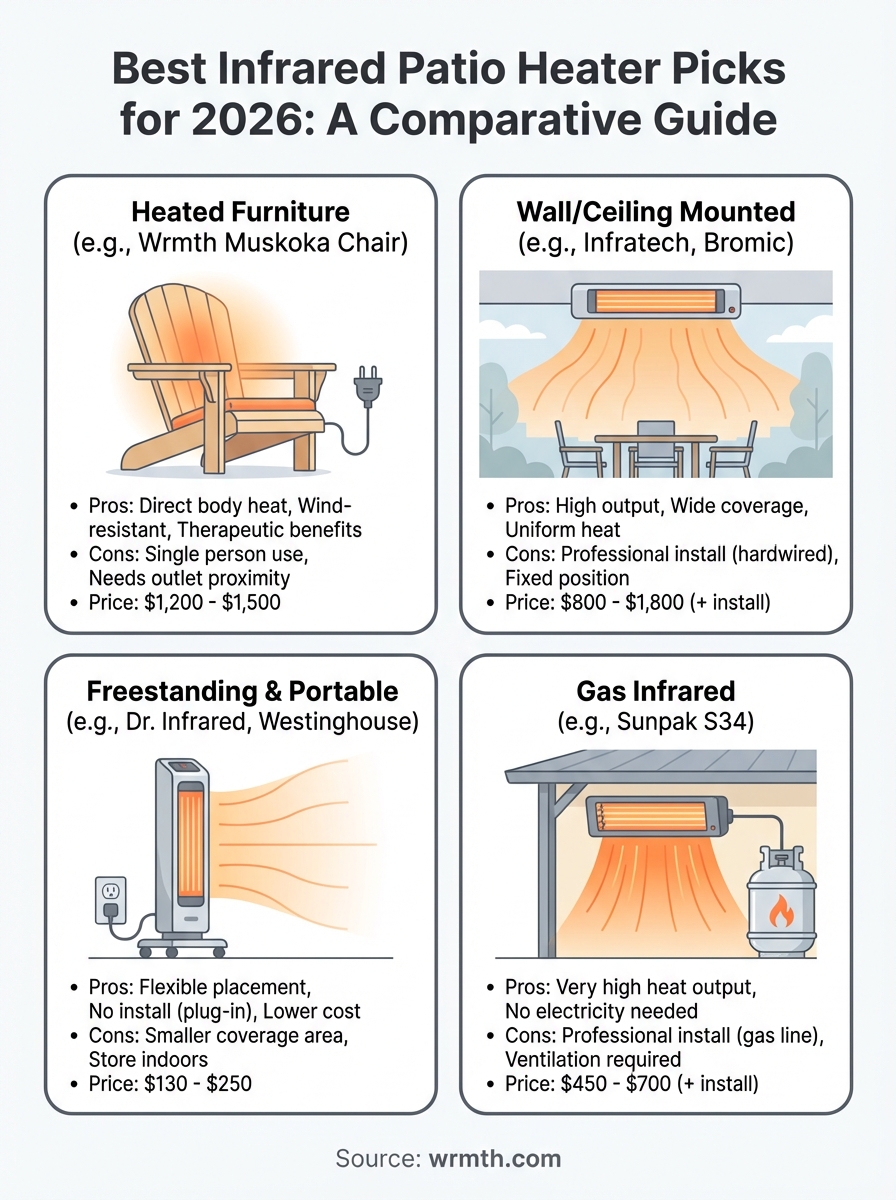
Next steps
You've explored 11 different options for the best infrared patio heater that suit various budgets, spaces, and heating needs. From budget-friendly portable models to professional-grade hardwired systems, you now understand what each approach delivers and where it falls short.
The question becomes whether any traditional patio heater truly solves the core problem: staying comfortable outdoors when temperatures drop. Most of these options heat the air around you, which means wind reduces their effectiveness and you're constantly adjusting position to stay warm. That's why wrmth furniture took a different approach with heated outdoor furniture that delivers warmth directly to your body, regardless of wind or weather conditions.
Your next step depends on your priorities. If you want flexibility and lower upfront costs, portable electric models make sense. For permanent outdoor living spaces where performance matters most, consider whether heating your furniture instead of the air gives you better results for extended outdoor comfort.