
IoT Furniture: 7 Examples, Trends, and Use Cases in 2026
You've heard about smart homes, but what happens when your furniture itself becomes intelligent? IoT furniture connects to the internet, collects data, and adapts to your needs-whether that's adjusting temperature, tracking your posture, or remembering your preferred lighting. As manufacturers embed sensors and connectivity into everything from chairs to mirrors, the line between furniture and technology continues to blur.
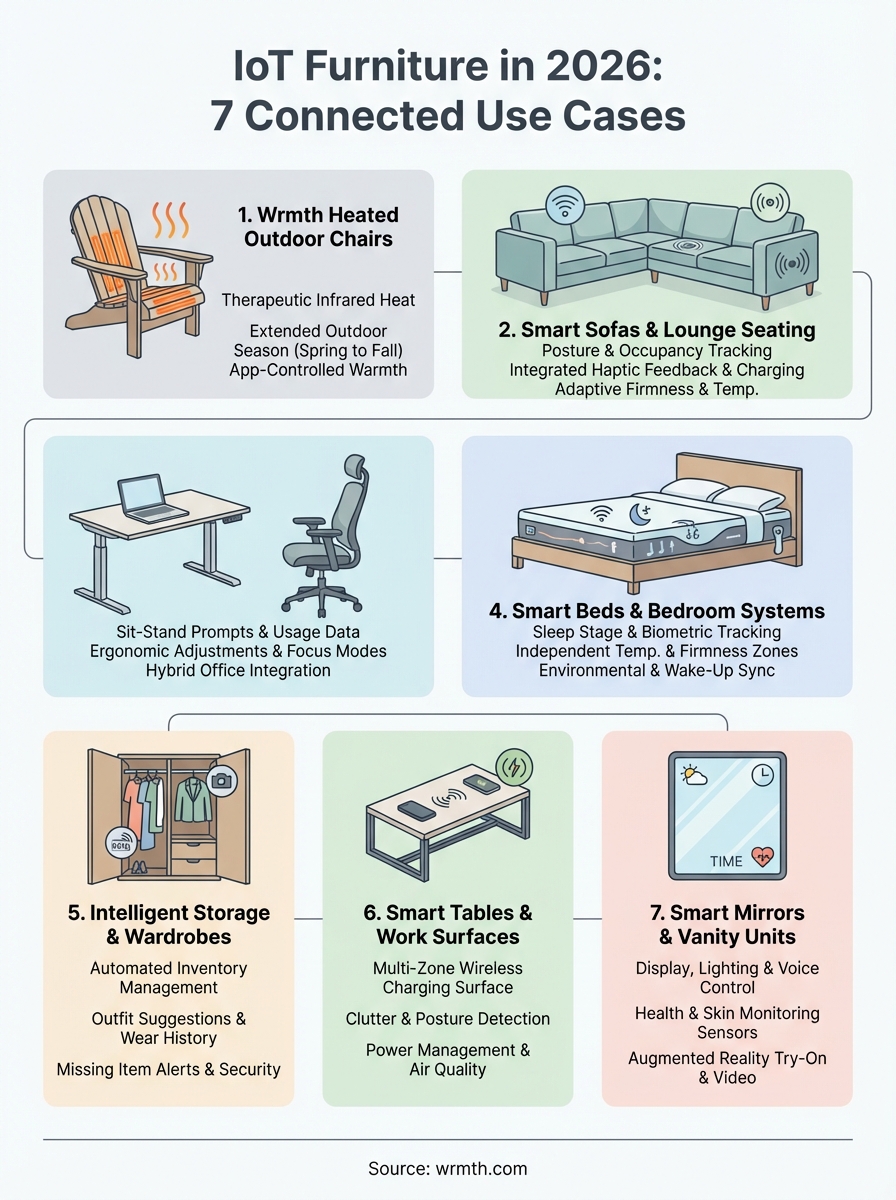
This article walks you through seven practical examples of IoT furniture you can find or expect in 2026. You'll see how heated outdoor chairs extend your patio season, how smart desks improve your workday ergonomics, and how connected beds might help you sleep better. We'll cover real use cases for homes and offices, discuss benefits and limitations, and highlight trends that matter. Whether you're researching options for your space or simply curious about where furniture technology is headed, you'll leave with a clear picture of what's available and what actually works.
1. Wrmth heated outdoor chairs
Wrmth takes outdoor furniture into connected territory by embedding heating elements directly into Muskoka-style chairs. These aren't simple space heaters bolted to wood. The company manufactures IoT-enabled seating that delivers dry, therapeutic heat while you relax on your deck or dock, even when the temperature drops. Built in North America, each chair integrates sensors and controls that let you adjust warmth to your preference, extending your outdoor season from early spring through late fall.
What Wrmth heated outdoor chairs are
You get a classic Adirondack chair design with a patented integrated heating core embedded into the seat and back. The system connects to a power source and includes controls for temperature adjustment on your phone, so you dial in the exact level of warmth you need. Wrmth builds these chairs to withstand outdoor conditions, using materials rated for decks, patios, and waterfront installations. The heating technology stays invisible in the design, preserving the traditional look while adding modern comfort.
How heating technology turns seating into smart comfort
The chairs deliver dry direct heat that warms your body directly rather than wasting energy heating the surrounding air. This approach mimics therapeutic heat pads and provides consistent warmth without moisture or bulky attachments. You control the temperature through simple interfaces, and the system responds quickly to your adjustments. The technology maintains safe surface temperatures while delivering enough heat to keep you comfortable in cool evenings or chilly mornings.
"Direct, personal warmth through furniture eliminates the need for inefficient patio heaters."
Use cases on decks, docks, and commercial patios
Homeowners place these chairs on backyard decks where traditional patio heaters fall short, especially in windy conditions. Cottage owners install them on docks and waterfront areas, where proximity to water makes conventional heating impractical. Commercial properties like resorts, restaurants with patios, spas, golf courses, and ski centers use heated seating to extend their outdoor service seasons and improve guest comfort. Hotels and vacation rentals add them as premium amenities that differentiate their properties.
Benefits for pain relief, sleep, and longer seasons
The dry heat provides therapeutic relief for chronic back pain, osteoarthritis, and fibromyalgia by relaxing muscles and improving circulation. Regular evening sessions in heated chairs can promote better sleep quality by raising your core temperature before bed, which helps trigger natural sleep mechanisms. Beyond health benefits, you gain months of additional outdoor living time, turning shoulder seasons into comfortable periods for morning coffee or evening relaxation.
Checklist for evaluating IoT furniture in 2026
Before you invest in heated outdoor furniture or any iot furniture, verify these points:
- Durability ratings for your specific climate and exposure conditions
- Power requirements and installation complexity
- Temperature range and adjustment speed
- Warranty coverage for both heating elements and structural components
- Safety certifications for outdoor electrical use
- Maintenance needs and expected lifespan
- Control options (manual, app-based, or both)
2. Smart sofas and lounge seating
Smart sofas bring connectivity and automation to your living room furniture, combining comfort with technology that responds to how you actually use your space. These pieces include embedded sensors that detect occupancy, adjust firmness, and remember your preferences. Manufacturers integrate wireless charging pads, USB ports, and voice control into designs that still look like conventional couches. You'll find models that heat or cool on demand, track your sitting posture, and sync with your home's entertainment system.
How smart sofas sense and adapt to users
Modern smart sofas use pressure sensors and weight distribution mapping to detect when you sit down and where you position yourself. The system learns your preferred seating spots and can automatically adjust cushion firmness in different zones to support your body better. Some models include posture monitoring that gently alerts you when you've been in one position too long. Temperature sensors detect your body heat and adjust built-in heating or cooling elements to maintain comfort without manual intervention.
Entertainment and wellness features to expect
You get integrated speakers and haptic feedback that sync with movies or music, creating an immersive experience without separate soundbars. Built-in massage functions target specific muscle groups using programmable patterns and intensity levels. Ambient lighting responds to content on your screen or shifts to support relaxation modes. Wireless charging surfaces eliminate cable clutter for phones and tablets, while USB ports keep devices powered during extended viewing sessions.
Best use cases in living rooms and media spaces
Smart sofas work best in dedicated home theaters where entertainment features justify the investment and complexity. Open-plan living rooms benefit from models that adjust quickly between active entertainment and quiet relaxation modes. Basement rec rooms and game spaces take advantage of haptic feedback and surround sound integration. Small apartments gain efficiency from sofas that track usage patterns and suggest optimal furniture arrangements.
Design and privacy considerations to keep in mind
Most smart sofas collect usage data and sitting patterns that manufacturers may access through cloud connections. You control privacy settings through companion apps, but you must actively review what data gets shared and stored. Design limitations appear when you want traditional upholstery styles, as most iot furniture uses modern materials compatible with embedded electronics. Repair complexity increases when components fail, since furniture technicians may not handle electronic troubleshooting, and electronics specialists don't typically work on upholstery.
"Most smart sofas collect usage data and sitting patterns that manufacturers may access through cloud connections."
3. Connected office desks and chairs
Connected office furniture transforms your workspace through sensors, motors, and network connectivity built directly into desks and chairs. These pieces monitor how long you sit, track your posture, and adjust height or firmness based on your work patterns. Unlike standard adjustable furniture, connected models integrate with your calendar and apps to prompt movement breaks, shift desk positions automatically, and collect data about your work habits. You control settings through smartphone apps, desktop software, or voice commands, creating a workspace that responds to your needs throughout the day.
What makes a desk or chair connected
Your desk becomes connected when it includes embedded sensors that track position, weight distribution, and usage duration. Most models feature motorized height adjustment that responds to schedules you set or posture data the system detects. Chairs add pressure sensors across the seat and backrest to monitor how you distribute your weight and whether you shift positions regularly. Connectivity comes through Wi-Fi or Bluetooth, linking your furniture to apps that display analytics and send adjustment reminders. Some systems integrate environmental sensors that track room temperature, light levels, and air quality at your specific workspace.
How IoT furniture supports ergonomics and focus
Connected desks prompt you to alternate between sitting and standing positions based on timers, calendar appointments, or detected inactivity periods. The system learns your preferences and suggests optimal switch intervals that match your work patterns. Chairs adjust lumbar support and seat tilt automatically when sensors detect slouching or poor posture developing. Focus-mode features can trigger desk height changes, lighting adjustments, and do-not-disturb status syncs across your devices when you start deep work sessions.
"Connected desks prompt you to alternate between sitting and standing positions based on timers, calendar appointments, or detected inactivity periods."
Use cases for hybrid offices and home workspaces
Corporate offices deploy iot furniture to maximize desk utilization in hot-desking environments, where sensors detect occupancy and reserve spaces automatically. Hybrid workers benefit from chairs that remember their preferences and adjust instantly when they arrive. Home offices gain professional-grade ergonomics without manual intervention, since the furniture adapts throughout your workday based on learned patterns. Coworking spaces use connected furniture to differentiate premium memberships and collect usage analytics that inform space planning decisions.
Data, security, and employee acceptance issues
Connected office furniture collects detailed activity logs that show when you arrive, how long you sit, and how frequently you take breaks. Employers gain visibility into workspace usage, but employees often resist monitoring that feels invasive. Network vulnerabilities exist when furniture connects to corporate systems, creating potential entry points for security breaches. You must review privacy policies carefully, since some manufacturers share anonymized usage data with third parties. Acceptance improves when companies clearly communicate what data gets collected, how long it's stored, and who can access individual versus aggregated information.
4. Smart beds and bedroom systems
Smart beds represent the most data-intensive category of iot furniture, combining mattresses, bases, and bedroom accessories into systems that monitor and respond to your sleep patterns. These beds include pressure sensors, temperature controls, and connectivity that track everything from heart rate to snoring intensity. Your mattress adjusts firmness in different zones throughout the night, while integrated systems control room temperature, lighting, and even ambient sound to optimize your sleep environment. Manufacturers package these features into beds that look conventional but contain computing power that rivals your smartphone.
Core features in smart beds and mattresses
Your smart bed tracks sleep stages through movement detection and heart rate monitoring built into the mattress surface. Temperature regulation works through heating and cooling zones that adjust independently for each side of the bed, accommodating different comfort preferences. Automatic firmness adjustment responds to pressure distribution, shifting support levels when you change positions. Most models include vibration alarms and gentle wake features that rouse you during light sleep phases rather than deep rest. Companion apps display sleep scores, efficiency metrics, and detailed breakdowns of time spent in REM, light, and deep sleep stages.
How IoT bedrooms track and improve sleep
Smart beds connect with bedroom environmental sensors that monitor air quality, humidity, temperature, and ambient light levels throughout the night. The system learns your sleep patterns and can trigger connected devices like thermostats, smart blinds, and air purifiers to create optimal conditions. Sleep coaching features analyze your data over weeks and suggest behavioral changes like adjusting bedtime routines or modifying room conditions. Integration with fitness trackers and health apps creates comprehensive wellness profiles that link daily activity to nightly rest quality.
"Smart beds connect with bedroom environmental sensors that monitor air quality, humidity, temperature, and ambient light levels throughout the night."
Health, insurance, and data privacy questions
Some health insurance providers offer premium discounts for customers who share sleep data demonstrating healthy patterns, but you must evaluate whether savings justify ongoing monitoring. Your bed collects intimate biometric information that reveals health conditions, relationship patterns, and daily routines. Manufacturers store this data on cloud servers that could face breaches or subpoenas. You control sharing settings through apps, but terms of service often grant companies rights to use anonymized data for research or product development.
What to look for when comparing smart bed brands
Prioritize beds with local data storage options rather than cloud-only systems if privacy matters to you. Check whether the mattress requires ongoing subscription fees to access features beyond basic tracking. Verify compatibility with existing bedroom furniture and smart home platforms you already use. Review warranty coverage carefully, since electronic components typically carry shorter guarantees than traditional mattress materials. Consider whether you actually need comprehensive tracking or if simpler sleep monitoring through wearables serves your goals without the furniture investment.
5. Intelligent storage and wardrobes
Intelligent storage transforms closets, cabinets, and wardrobes into inventory management systems that track what you own and how often you use each item. These systems embed RFID readers, weight sensors, and cameras into storage furniture to monitor contents automatically. You gain visibility into your possessions without manual cataloging, while the system learns your habits and suggests outfit combinations, alerts you to missing items, or flags clothing you haven't worn in months.
How connected wardrobes track items and usage
Your wardrobe uses RFID tags attached to clothing or computer vision cameras mounted inside to identify items when you add or remove them. Weight sensors detect changes in shelf loads, while motion tracking records which sections you access most frequently. The system logs usage patterns over time, building profiles that show which pieces you wear regularly and which sit untouched. Connected hangers can detect when garments leave and return, creating detailed wear histories that inform maintenance schedules.
Use cases from closets to kitchen cabinets
Bedroom closets benefit from outfit suggestion algorithms that match items based on weather, calendar events, and past combinations you've worn. Kitchen cabinets track pantry inventory, alerting you when staples run low or items approach expiration dates. Commercial applications include retail stockrooms where iot furniture monitors merchandise movement automatically, and hotel storage systems that track linens and supplies across properties.
"Your wardrobe uses RFID tags attached to clothing or computer vision cameras mounted inside to identify items when you add or remove them."
Benefits for organization, shopping, and security
You stop buying duplicate items because the system shows exactly what you already own before shopping trips. Clothing rotation becomes visible, helping you maximize value from your wardrobe. Security features alert you when unexpected items disappear or when access occurs during unusual hours, particularly valuable for shared spaces or vacation properties.
Limits, costs, and when simple storage is enough
Connected storage requires significant upfront investment in both furniture and item tagging, with ongoing costs for cloud storage and system maintenance. You must manually tag existing possessions or buy compatible items with embedded chips. Simple organization methods work fine when you maintain reasonable inventory levels and don't need automated tracking for everyday decisions.
6. Smart tables and work surfaces
Smart tables embed wireless charging, power management, and sensing capabilities directly into work surfaces you use daily. These tables detect device placement, monitor surface conditions, and manage power distribution across multiple charging zones without visible cables or outlets. You'll find IoT furniture in this category ranging from coffee tables with built-in Qi charging to full desks that track your workspace organization and environmental conditions. Manufacturers integrate these features while maintaining traditional materials like wood and glass, keeping the technology invisible until you need it.
Wireless charging and power management features
Your table surface includes multiple Qi-compatible charging zones that activate automatically when you place devices down, eliminating the need to align phones precisely with charging spots. Power management systems distribute electricity efficiently across zones, preventing overheating while charging laptops, tablets, and phones simultaneously. Some models include USB-C ports that emerge from the surface through motorized panels, appearing only when needed and retracting to maintain clean lines. Smart tables track power consumption per device and can prioritize charging for low-battery items first.
How tables can sense clutter, posture, and air quality
Tables equipped with weight sensors and pressure mapping detect how many items sit on the surface and whether clutter exceeds thresholds you set. Computer vision systems in advanced models identify object types and send notifications when high-value items like keys or wallets remain on the table too long. Posture monitoring uses proximity sensors to detect your distance from the table edge and body angle, alerting you when you lean too far forward. Integrated air quality sensors measure particulates, humidity, and temperature at table height, providing more accurate readings than wall-mounted devices.
"Tables equipped with weight sensors and pressure mapping detect how many items sit on the surface and whether clutter exceeds thresholds you set."
Use cases in homes, cafes, and shared offices
Home offices benefit from tables that charge devices automatically while tracking work surface organization, helping you maintain focus in dedicated workspaces. Coffee shops deploy smart tables as premium seating options that attract remote workers who need reliable charging without competing for wall outlets. Coworking spaces use tables that detect occupancy and reserve spots through app integration, eliminating desk-finding frustration during peak hours.
Durability, safety, and installation considerations
Smart tables require electrical connections that complicate placement away from outlets unless you install floor boxes or run surface-mounted cables. Surface materials must protect embedded electronics from spills while maintaining charging efficiency, limiting your finish options. Safety certifications verify that wireless charging meets exposure limits for electromagnetic fields, particularly important for extended daily use. Installation costs increase when retrofitting existing furniture compared to purpose-built smart tables.
7. Smart mirrors and vanity units
Smart mirrors blend reflective surfaces with display technology to create iot furniture that shows information while you check your appearance. These units embed LCD screens, LED lighting, and touch controls behind glass that functions as both mirror and display. You interact with weather forecasts, news headlines, and calendar appointments without pulling out your phone. Bathroom vanities now include health monitoring sensors that track skin condition, posture, and even detect changes in facial features that might indicate health issues.
Key features in smart mirrors today
Your smart mirror displays customizable widgets that show time, weather, traffic updates, and appointment reminders through voice commands or touch controls. Adjustable LED lighting simulates different environments and times of day, helping you apply makeup or check outfits under conditions that match your destination. Built-in cameras enable video calls and fitness form checking, while some models include speakers for music or podcast playback during morning routines.
Bathroom, entryway, and fitness use cases
Bathrooms become smart morning hubs where you catch up on news and emails while getting ready, reducing phone distractions during your routine. Entryway mirrors help you verify outfit choices under various lighting conditions and can photograph looks for outfit tracking apps. Home gyms benefit from mirrors that display workout videos, count repetitions, and analyze your form in real time.
"Bathroom vanities now include health monitoring sensors that track skin condition, posture, and even detect changes in facial features that might indicate health issues."
Privacy, screen time, and accessibility issues
Cameras in bathroom mirrors raise significant privacy concerns, particularly in shared homes or rental properties where you can't verify whether recording features stay disabled. Screen-equipped mirrors add more display time to rooms where you might prefer disconnecting from notifications. Voice control and adjustable display heights improve accessibility for wheelchair users, though glare from bright displays can create problems for people with visual sensitivities.
Future trends for reflective smart surfaces
Expect augmented reality overlays that let you virtually try clothing or hairstyle changes before committing to actual changes. Health diagnostics will expand beyond skin tracking to include early detection of jaundice, anemia, or circulation issues through facial analysis algorithms. Integration with medical providers could enable remote health consultations where your mirror shares diagnostic data directly with healthcare professionals.
Wrapping up
IoT furniture brings connectivity and intelligence to pieces you use every day, from heated outdoor chairs that extend your patio season to smart beds that optimize your sleep environment. You've seen how sensors, heating elements, and network connectivity transform traditional furniture into responsive systems that adapt to your needs. Each category serves specific purposes, whether you need therapeutic warmth on your deck, better ergonomics at your desk, or automated organization in your closet.
The technology works best when it solves real problems you face rather than adding complexity for its own sake. Connected furniture makes sense when you actually use the features and accept the tradeoffs in cost, privacy, and maintenance. Start by identifying which spaces in your home or office could benefit most from smart features, then evaluate specific products against your actual usage patterns.
If extending your outdoor living season tops your priority list, Wrmth's heated outdoor chairs deliver therapeutic warmth that lets you relax outside even when temperatures drop, combining proven heating technology with durable furniture design built for North American climates.